
TruckYou: Digitizing End-to-End Logistics Operations

TruckYou: Digitizing End-to-End Logistics Operations
How the Integrator seat guided a full Shipper & Trucker platform from idea to measurable results - deciding what to build, what to skip, and when it was truly done.
Executive Summary
The Challenge
TruckYou, a logistics business, needed a complete digital ecosystem to connect shippers, truckers, and drivers - ensuring transparency, real-time tracking, and secure transactions across every stage of the freight lifecycle. But like every ambitious product, it started with far more ideas than any budget or timeline could carry.
The Solution
With Krishna Kumar in the Integrator seat - guiding scope, sequence, and validation - his engineering company, Ksoft Technologies, built a full-stack Shipper & Trucker Management Platform: mobile apps, web panels, and an admin system managing shipments from creation to delivery.
The Approach
The engagement was anchored in four core principles: Automation, Reliability, Scalability, and Transparency - with one operating rule above them all: build the core loop first, prove it with real shipments, then earn the next feature.
The Challenge
Fragmented Operations Were Costing Time and Money
Before the platform, TruckYou's operations were held together by manual processes, siloed tools, and constant firefighting. Every handoff was a potential failure point.
Operational Pain Points
No Real-Time Visibility - Shipment status relied on manual check-ins and phone follow-ups.
Disconnected Stakeholders - Shippers, truckers, and drivers had no shared communication channel.
Proof Validation Gaps - No standardized way to confirm pickups or deliveries.
Financial & Process Barriers
Delayed Payments - Invoice generation and settlement required manual intervention.
Pricing Inconsistencies - No centralized pricing rules led to disputes and revenue leakage.
No Central Command - Managing drivers, trucks, and staff across locations was uncoordinated.
The biggest risk was never the code. It was building the wrong things first.
The Integrator Seat
What I Did for TruckYou as Integrator
An Integrator does not hand over a plan and leave. I sat between TruckYou's vision and the engineering team, and owned how the build ran - week after week, until the numbers said done. Here is what that seat covered:
Feature triage and scope ownership. I ran the decision process on every proposed feature - what to build now, what to park, and why. The scope was written down, and I defended it.
A weekly delivery rhythm. One structured meeting a week, run to a clock. Every feature had one owner and one deadline. Issues were named, decided, and closed - not carried to next week.
A live scorecard. Cycle time, tracking coverage, and invoice automation were measured from day one - so progress showed up in numbers, not in opinions.
Founder-to-engineer translation. Business needs became clear engineering specs. Engineering trade-offs came back as plain business choices. No translator needed - operations and technology sat in one head.
Quality gates before every release. Structured, hands-on QA passes at the API level caught and fixed defects before they could reach shippers, truckers, or drivers in production.
Validation planning. Staged releases with real end-to-end shipment runs - create, pay, assign, pick up, deliver, invoice - before the next layer was added.
Plain-English updates. One short weekly update on the true state of the build - including the uncomfortable parts - so decisions never waited on a status meeting.
Documented handover. The workflow, statuses, and processes were written down as we built - so the operating team inherited a running system, not tribal knowledge.
The Advice That Shaped the Build
Good products are a stack of small, firm decisions. These are the calls I made - and each one shows up in the platform and in the results:
“Take payment before the truck moves.” Payment is collected in-app before dispatch. Cash-flow risk drops, and payment confirmation itself triggers the next workflow stage - no chasing.
“Proof beats promises.” Photo upload at both pickup and delivery. An auditable record replaced “he said, she said” - disputes fell, trust rose.
“Name every stage.” Created → Accepted → Payment → Assigned → Picked Up → Delivered → Invoiced. One shared status language across all apps, so nobody has to ask where a shipment is.
“Let the system send the updates - not people.” Automated notifications at every milestone ended manual follow-up calls across the whole lifecycle.
“Set pricing rules once, centrally.” Central pricing in the admin panel closed the gap where disputes and revenue leakage lived.
“Automate the payout - paid truckers stay.” Earnings settle automatically on confirmed delivery. Faster payouts became a retention tool, not just an accounting fix.
“Build roles, not one mega-app.” Three focused apps - shipper, trucker, driver - plus one admin panel. Each user sees only what their job needs. Simpler apps, faster adoption.
“Skip the nice-to-haves until the core loop earns them.” Every attractive extra was parked for a later phase, to be revisited only after real shipments proved the core. That discipline is why the platform shipped lean, on purpose.
The Three-Question Test Behind Every Call
Every proposed feature had to answer yes to at least one of these before it earned a place in the build:
Does it move a shipment forward?
Does it move money safely?
Does it build trust between shippers, truckers, and drivers?
The hardest product decision is never what to add. It is what to skip - and when.
The Solution: An Integrated Logistics Ecosystem
We mapped the entire shipment lifecycle from origin to destination and engineered a unified platform - each component tailored to the specific role of every stakeholder in the supply chain.
Shipper Mobile App - Create shipments, make payments, track status, and receive automated notifications at every milestone.
Trucker Mobile App - Accept shipments, manage assignments, monitor drivers, and track earnings on the go.
Driver Mobile App - View assigned loads, perform pickup and delivery actions, and upload photo-based proof of delivery.
Web Panel & Admin - Full control over shipments, users, pricing rules, disputes, and system-wide analytics from a centralized dashboard.
One Workflow. Everyone Aligned.
- Created
- Accepted
- Payment
- Assigned
- Picked Up
- Delivered
- Invoiced
Automated workflow transitions mean no manual handoffs between stages. Status updates propagate instantly across all apps and panels, keeping shippers, truckers, and drivers aligned at every step.
Key Feature
Secure Payment & Automated Invoicing
01 - Shipper Pays In-App. Payment is collected securely within the platform before truck dispatch.
02 - Status Auto-Updates. Payment confirmation instantly triggers the next workflow stage.
03 - Invoice Auto-Generated. System creates a formatted invoice, available via email or download.
04 - Trucker Gets Paid. Earnings are settled to truckers automatically upon confirmed delivery.
Business Impact
Zero manual invoice creation - fully automated end-to-end
Faster trucker payouts improve retention and satisfaction
Email and downloadable PDF invoices for seamless record-keeping
Transparent payment trail reduces disputes and financial discrepancies
Real-Time Tracking & Smart Notifications
The platform's notification engine ensures every stakeholder receives the right information at the right moment - eliminating manual follow-up across the entire shipment lifecycle.
Live Status Visibility - Shipment progress tracked across all stages from creation to delivery.
Proof-Based Validation - Photo upload for both pickup and delivery ensures accountability.
Cross-Platform Sync - Instant updates reflected across mobile apps and web panels simultaneously.
Automated triggers cover the full journey: Shipment Accepted → Payment Completed → Truck & Driver Assigned → Pickup Confirmed → Delivery Completed → Invoice Generated.
Truck, Driver & Admin Management
Operational control is centralized across the Trucker Web Panel and Admin Panel, giving dispatchers, managers, and administrators full visibility into every resource and transaction.
Truck Management - Add, edit, and view the full fleet. Assign vehicles to shipments post-payment with real-time status and availability.
Driver Management - Manage driver profiles, assign drivers to shipments, and monitor performance - with live status reporting from the driver app.
Staff Access Control - Role-based permissions ensure the right people access the right data - from dispatchers to finance to operations.
Admin Analytics - System-wide reporting covers shipment volumes, user activity, pricing rules, dispute resolution, and financial settlements.
What Made This Engagement Different
Beyond delivering features, this was purposeful engineering with an Integrator holding the line - a system as resilient and scalable as the logistics operation it powers.
Structured Workflow - A clear shipment lifecycle with explicitly defined statuses removes ambiguity and keeps every party aligned.
Real-Time Synchronization - Instant updates cascade across all apps and panels - no stakeholder ever works with stale information.
Proof-Based Transparency - Photo-verified pickup and delivery creates an auditable record that builds trust and satisfies compliance.
Built to Scale - The architecture handles growing volumes, new roles, and new regions without a system rebuild.
Intelligent Automation - Smart triggers and automated transitions free operations staff to focus on exceptions, not routine tasks.
Managing shipments used to be chaotic - constant follow-ups, manual tracking, and no single source of truth. With this system, everything is streamlined. We can track shipments in real time, manage drivers efficiently, and handle payments without delays. It has completely transformed how we run our logistics operations.
Is This Your Story Too?
Who this serves. Founders of scaling startups - roughly 10 to 50 people, real revenue - where scope keeps growing, decisions keep waiting, and every update still routes through the founder.
The outcome. A build that ships lean and on purpose, a company that runs on a system, and results you can measure - not just launch.
Why this is different. A consultant hands you a plan. A dev shop hands you code. I take a seat - and because operations and technology sit in one head, the advice above traveled straight from the leadership table into working software.
We help founders of scaling startups get products built lean and companies that run without them - without hiring a full-time COO or living inside every update.
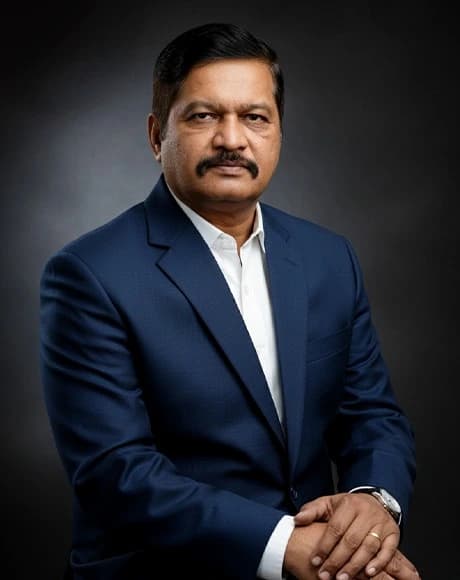
Who is in the seat
Krishna Kumar
Former Indian Air Force airman. 11+ years running Ksoft Technologies, my own software company, with 20+ products delivered for clients in the US, UK and Europe. I have led payroll, hiring, delivery and recovery, so I run your week as someone who has run a company, not as a consultant reading a framework.
Read the full storyKeep reading
Go deeper before you book
Sound like your build?
NDA-first, always. I'll tell you honestly if it's too early for the Integrator seat.