
Fractional Integrator / COO for EOS® & scaling startups · US, UK & EU
You're the Visionary. I'm the Fractional Integrator Who Executes the Vision.
I'm Krishna Kumar. I join your leadership team part-time, run your weekly execution rhythm, and turn quarterly priorities into shipped results.
Not ready to talk? The scorecard is 7 yes/no questions. Instant result, no call, no pitch.
11+ years running teams · 20+ products delivered · US, UK & EU clients · NDA-first, always.
The Integrator Seat
- 2 weeks
- To onboard into the seat
- 1 day / week
- Part-time engagement
- 20+
- Products delivered
- US, UK & EU
- Clients, NDA-first always
Decisions in Days
One Day a Week
A Stronger Leadership Table
The Truth in Numbers
Priorities Driven to Done
What is a fractional integrator?
A fractional integrator is a part-time senior operator who takes the Integrator seat on a startup's leadership team. They run the weekly leadership meeting, own the scorecard, and drive quarterly priorities to done, usually one day a week. Typical cost is $2,500 to $6,000 a month after a $4,000 two-week Clarity Sprint.
How the Integrator seat works →In the News
Media coverage and mentions from across the industry.
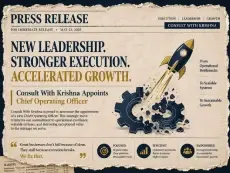
 Menu Order AI Appoints Krishna Kumar as Chief Operating Officer
 Jul 3, 2026
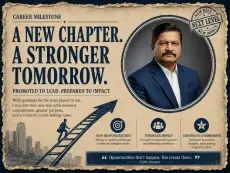
 Krishna Kumar Launches Fractional Integrator & COO Service for Stalled Startups
 Jul 10, 2026
 Krishna Kumar's appointment as COO — announced on LinkedIn
 Jul 2026
 Melissa Butler on welcoming Krishna Kumar to the leadership teamJul 2026
About Me
I'm the Integrator Founders Call WhenTheir Vision Outgrows Their Week.
Before software, I served as an airman in the Indian Air Force. Ground crew has one rule: check the machine before it flies. The pilot gets the glory. The ground crew makes sure the plane comes home. I liked that job. I still do it - the machines just changed.
For the last eleven years I have run Ksoft Technologies, my own software company, delivering custom products for clients across the US, UK, and Europe. Running a company taught me what no book can: payroll is real, delivery is real, and a founder's exhaustion is real. I have hired, fired, shipped, missed, recovered, and shipped again - more than 20 products worth.
Along the way, I kept meeting the same founder. A true Visionary - full of ideas, energy, and drive. And completely buried. Not because they were weak, but because every company needs two seats at the top: one to dream and one to deliver. They were sitting in both.
An Integrator fills the second seat. Someone who runs the week, holds the team to its word, and turns the Visionary's ideas into finished work. That is the seat I take. And because I have led engineering teams my whole career, nothing gets lost between the plan and the build.
- The Integrator seat on your leadership team
- Weekly leadership meetings, run to a clock
- A live scorecard of the numbers that matter
- Quarterly priorities - set, owned, and driven to done
- Team accountability, handled with respect
- Remote with US, UK & European startups
“You fly the plane. I run the ground crew. And the plane comes home - every time.”





Trusted by founders and executives across the US, UK, Europe & India
What I Do
One Seat. Four Things You Get Back.
Every growing company has two jobs at the top. The Visionary sees where to go. The Integrator makes the company get there. When I take the second job off your hands, four things come back to you: speed, convenience, status, and certainty. Here is what that looks like in practice.
What the Integrator Seat Covers
- Your weekly leadership meeting - run on time, issues named, solved, and closed
- A live scorecard, so problems show up in numbers before they show up in fires
- Quarterly priorities with one owner and one deadline each - driven to done
- Accountability across the team, plus one plain-English update to you every week
For tech startups, I bring 11+ years of experience leading engineering teams. I work directly with your tech team to keep product decisions clear and delivery moving. Still at the MVP stage? My engineering team can take your product from idea to launch → www.ksofttechnologies.com
Let's make something great work together.
Your Ideas Deserve a Company That Can Execute Them.
Speed, convenience, status, and certainty - from one seat at your leadership table.
How I Work
The Integrator's Operating System - No Black Boxes, No Surprises
From the first call to full handover, you always know exactly how your company is running, what happens next, and why. Here is how the Integrator seat works.
 01
01Diagnostic - The First Two Weeks
I Learn Your Business Before I Change Anything
I sit inside your business. I join your meetings, talk to your team, and read the numbers. No slides, no theory - just a clear picture of where execution breaks and why everything still routes through you.
What you walk away with:
- A short written diagnostic report - in plain English
- An execution gap map: where work slows, stalls, or circles back to you
- A draft scorecard of the numbers that actually matter
- A 90-day priority plan, with what I will own first
 02
02The Weekly Rhythm
Decisions Stop Waiting for You
I take the Integrator seat. I run the weekly leadership meeting, own the scorecard, and make sure every priority has one owner and one deadline. Decisions that waited a month now close in a week. Your team gets clarity. You get your calendar back.
What happens every week:
- Leadership meeting run to a clock - no drift, no repeat conversations
- Scorecard reviewed - the truth in numbers, not in opinions
- Issues raised, decided, and closed - not carried to next week
- One plain-English update to you - the true state of the company in five minutes
 03
03Accountability, Held by Me
Your Team Keeps Its Word. You Keep Your Relationships.
The hardest part of the founder's job is chasing your own people. As your Integrator, I hold the team to its commitments - on time, with respect - so you stay the Visionary they look up to, not the boss chasing overdue tasks.
What this covers:
- Every commitment tracked to a name and a date
- Hard conversations had directly - not pushed back to you
- Cross-team conflicts settled at the leadership table, not in your inbox
- Hiring support for the key seats your growth needs next
 04
04Quarterly Reset & Handover Readiness
Every 90 Days, We Step Back
We review the quarter, keep what worked, cut what did not, and set the next priorities. I document the seat as I run it - so when you are ready for a full-time Integrator or COO, they walk into a working system, not a mess.
What you walk away with:
- A quarterly review and the next quarter's priorities, agreed together
- Documented playbooks: meetings, scorecard, and processes in writing
- A refreshed scorecard as the business changes
- A clean handover plan for your future full-time hire
The Process
From Buried Visionary to Free Visionary - Step by Step.
This is the exact path every engagement follows. No vague promises. No "it depends." Here is what happens, step by step.
The Fit Call
Thirty minutes. You tell me how your week actually looks. I tell you plainly whether an Integrator would help right now - or whether it is too early. Either way, you leave with clarity.
The Diagnostic (Two Weeks)
I sit inside your business, meet your team, and read the numbers. You get a written report: where execution breaks, and what I will own first. We both decide with facts, not guesses.
I Take the Seat
The weekly rhythm begins. I run the leadership meeting, own the scorecard, and drive the quarter's priorities. Within weeks, decisions stop waiting for you.
The Quarter
Priorities get driven to done. The team learns the rhythm. You get one plain-English update every week - and your calendar goes back to customers, product, and the next raise.
Reset, Continue, or Hand Over
Every 90 days we reset priorities. When the time comes for a full-time Integrator, I help you find them and hand over a documented, running system. This is the moment most founders say: "I wish I had done this a year earlier."

Why Work With Me
What You Get With an Integrator in the Seat: Speed. Convenience. Status. Certainty.
Founders do not buy meetings and scorecards. They buy what those things return. Working with me returns four things - and each one is measurable within the first quarter.
Speed - Momentum in Weeks, Not Quarters
A full-time executive search takes six months. I am in the seat within two weeks. Decisions that used to wait for you get made in days. By the end of the first quarter, priorities are driven to done - and your company moves at the pace your vision deserves.
Convenience - One Person. One Day. Nothing New to Manage.
No firm, no team of juniors, no onboarding circus. One senior operator, one day a week, who runs the rhythm so you do not have to. You read one five-minute update. And because I have led engineers for eleven years, operations and technology sit in one head - no translator required.
Status - You Remain the Visionary
Your team sees you leading the future - not chasing overdue tasks. Your investors see a company that runs like one twice its size: meetings on time, numbers on hand, promises kept. The vision carries your name. The follow-through carries mine.
Certainty - You Always Know Where You Stand
A signed NDA before anything else. A written diagnostic before any change. A scorecard that tells the truth every week - even when it is uncomfortable. Behind it: eleven years running my own company and 20+ deliveries. The plane comes home. Every time.
What Clients Say
People I Have Delivered For - In Their Own Words.
“KK is a natural leader and entrepreneur. I hired him for several web projects and he delivered excellent results every time. His professionalism, diligence, and work ethic are second to none. I highly recommend him.”
Vice President of Merchant Services at NCMIC
“Krishna sees every challenge as an opportunity - I have yet to hear 'no' after a work request, no matter how complex. Send anything his way and you'll have a quote and a clear timeline back within 24 hours.”
Entrepreneur, executive leadership in SaaS, IT outsourcing & online marketing
How We Can Work Together
Three Ways to Fill the Integrator Seat
Three levels of ownership. Every engagement starts with a signed NDA and a two-week diagnostic - so we both decide with facts.
The Advisor - An Integrator On Call
Priced after the Clarity Sprint
For founders who already have someone running operations but want a trained Integrator's eye beside them. Monthly working sessions, direct access between them, and an honest read on your plans before you commit to them.
The Integrator - One Day a Week, In the Seat
$2,500 - $6,000 / month
I take the Integrator seat on your leadership team. Weekly meeting, live scorecard, quarterly priorities driven to done, accountability held, and one plain-English update to you every week. This is where Visionaries get their calendar back - and their certainty with it.
The Embedded Integrator - Deeper in the Business
Scoped after the Clarity Sprint
For companies going through a major phase of change - a big launch, restructure, or rapid scaling period. I step in two to three days a week, work closely with the team, and take stronger ownership of delivery, hiring, and execution until things are back on solid ground.
The engagement begins with a two-week Diagnostic & Clarity Sprint at $4,000. What follows is shaped by what we uncover, with the scope, deliverables, responsibilities, and fee structure clearly defined and agreed in writing before any further engagement begins.
📌 Not sure which level fits? Book the 30-minute fit call. I will tell you exactly what you need - and what you don't. No commitment required.
Is This Right For You?
I Keep Only a Few Integrator Seats at a Time. Read This Before You Book.
The Integrator seat is a hands-on role inside your company - not a report on your desk. The founders who get the best results match this profile.
This is for you if
- Your company has real revenue and a real team - roughly 10 to 50 people.
- You are a Visionary drowning in operations, and you know it.
- You want someone in the seat, not advice from the sidelines.
- You are willing to hand over real ownership - not just tasks.
- You want the true state of the company every week, even when it is uncomfortable.
- You understand that a good Integrator pays for himself in founder time alone.
This is NOT for:
- You are pre-revenue or still validating the idea. That is a different job, and my engineering company Ksoft Technologies builds MVPs for it.
- You want advice only, with no one in the seat.
- You need every decision to still pass through you.
- You are shopping for the cheapest option, not the safest pair of hands.
- You are not ready to give an Integrator access to your team and your numbers.
If that's you, no hard feelings - and I'll tell you on the first call, not after the invoice.
Free Self-Test
The Founder Bottleneck Scorecard
7 yes/no questions. You'll get your score and the one thing to fix first. Instant result · no call · no pitch.
A few of the questions
- Do decisions above a certain size wait until you're in the room?
- Has a priority slipped this quarter because nobody owned it but you?
- Would you struggle to name this week's three most important numbers - from memory?
+4 more questions · takes under 2 minutes
FAQ
Questions Visionaries Ask Before Handing Over the Keys
Honest answers for founders of scaling startups in the US, UK, and Europe.
A fractional integrator is a part-time senior operator who takes the Integrator seat on a startup's leadership team. They run the weekly leadership meeting, own the scorecard, and drive quarterly priorities to done, usually one day a week. Typical cost is $2,500 to $6,000 a month after a $4,000 two-week Clarity Sprint.
It is for founders with real revenue and a real team, roughly 10 to 50 people, who are past finding product-market fit and are now running the company instead of leading it. It is not for pre-revenue founders still testing an idea, and it is not for founders who want advice only. If you are earlier than that, I will tell you on the first call and point you somewhere better.
Both words describe the same seat. "Integrator" is the word EOS uses. "COO" is the word most founders use. I sit in your leadership team part-time, run the weekly rhythm, own the numbers, and hold the team to its commitments. Call it whichever your board understands.
An EOS Implementer teaches your team the system in scheduled sessions. An Integrator sits inside your company and runs it week to week. The Implementer coaches the process. I do the work in the seat.
Four things. The weekly leadership meeting. The scorecard. Chasing people for updates. And the job of turning your ideas into a plan someone else owns. You keep customers, product, fundraising and direction. That is the trade.
Two weeks to a written diagnostic. Four to six weeks before decisions stop waiting for you. One quarter before priorities finish instead of rolling forward. If nothing has moved by the end of the first quarter, the engagement was wrong and we should both say so out loud.
The Clarity Sprint is $4,000 for two weeks. You get a written report on where execution breaks, a draft scorecard and a 90-day plan. If you stop there, the report is still yours. Ongoing engagements run $2,500 to $6,000 a month, agreed in writing before the seat starts.
No. If you run EOS, I fill the Integrator seat and use the toolset your team already knows - Level 10 Meetings, Scorecard, Rocks, V/TO. If you do not, I bring a simpler version of the same rhythm: one meeting, a short list of numbers, and priorities with one owner each. The rhythm matters more than the label.
I work remotely with founders in the US, UK, Europe and Australia. The weekly leadership meeting is set at a fixed time that suits your team, and a written update reaches you every week, so nothing depends on live overlap. We agree the meeting slot and my working hours in writing before the seat starts.
I keep only a few Integrator seats open at a time, so availability changes. Book a 30-minute fit call and I will tell you plainly whether a seat is open and when I could start. If I am full, I will say so and point you to the next best option.
One person in the seat. Me. No junior team, no account manager, no handover after you sign. If your product also needs building, my engineering company Ksoft Technologies can do that as separate, separately priced work - never bundled in quietly.
The first quarter is a commitment, because a rhythm does not hold in less. After that it runs month to month with 30 days notice either way. You keep the scorecard, the playbooks and the documented seat. Nothing is locked behind me.


Fractional Integrator, Wherever Your Team Is
Remote, one day a week. Compare fractional vs full-time COO, or start with the Clarity Sprint.
Fractional Integrator for ScalingStartup Founders.
No pressure, no pitch deck. Just a 30-minute conversation to see if it's a fit - and honest advice either way.